Energy Harvesting: Ambient Energy for Low-Power Systems

Energy harvesting is the process of collecting energy from ambient energy sources, such as light, heat, vibration, or electromagnetic fields, and storing it as electrical energy in a battery or capacitor for later use. The principle is that a continuous supply of low-level energy is captured to provide a short-term, higher energy output. The stored energy is typically used to supply power to low power supply devices, such as microprocessors, sensors, or wireless sensor power and network communication modules.

The electromagnetic spectrum of UV and visible light

Fig. 1: The electromagnetic spectrum of UV and visible light

Common Ambient Energy Sources

Photovoltaic

Solar cells can generate useful amounts of photovoltaic power by absorbing photons of light, even in indoor locations. The open-circuit DC output voltage of a PV cell is around 500mV–800mV at 100 Lux, but higher voltages can be generated by wiring multiple cells in series, using larger cells, or exposing the cells to stronger light. If heavily loaded, the output voltage drops significantly, so the optimum load (maximum power point) must be constantly tracked to compensate for changes in light intensity.

Thermoelectric

If there is a temperature gradient across two dissimilar conductors, they generate an electric current between them (known as the Seebeck effect). Thermoelectric generators (TEGs) use this effect to convert thermoelectric energy from ambient heat into electricity using semiconductor junctions to generate usable DC power. The DC power increases proportionally with the temperature difference between the hot and cold junctions and the surface area of the generator.

Vibration

The most common vibration energy harvesters use a spring-loaded mass that moves a magnet within fixed coils to generate AC power. When the mass-spring system is tuned to resonate with the main frequency of the vibration, it can produce significant power output.

Mass-Flow

Moving liquids or gases spin a small turbine to generate electricity. These micro-turbines can be installed in air-conditioning ducts, water pipes, or on the exterior of vehicles to generate AC power from air or water flow created by the vehicle’s movement. Vortex-shedding is an alternative mass-flow energy harvesting method with no rotating parts, often combined with piezoelectric energy devices.

Piezoelectric

This method converts mechanical strain into a high-voltage, low-current output that can serve as an energy source for a harvester. For instance, a piezoelectric base is often paired with a vibrating vortex-shedding wand to convert oscillations into AC voltage.

Electromagnetic

Devices that collect and use electromagnetic energy, such as electric fields, Wi-Fi signals, or radio waves, use an antenna to generate very low-level power, typically in the µW range. This method is primarily used indoors, although high power can be produced when directed microwave beams are used as the source in outdoor locations.

Electronic Components of an Energy Harvesting System

Boost Converter

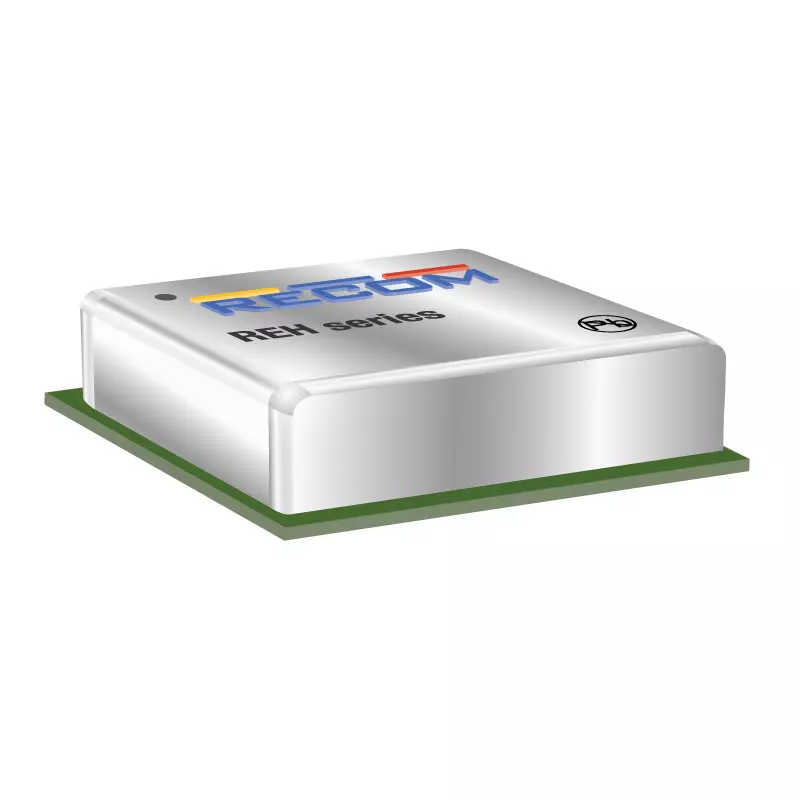
Most ambient energy sources provide an output voltage that is often too low for direct use. Therefore, the first stage of a harvesting system is a DC/DC converter configured as a boost converter. The boost converter raises the low input voltage to a higher level suitable for charging a small battery or a supercapacitor. For example, the REH harvester accepts input voltages starting from 0.05VDC and boosts the voltage up to 4.12VDC to charge a rechargeable battery or 4.50VDC to charge a two-cell supercapacitor (pin selectable).

System Controller

The system controller manages charging and discharging of the energy storage elements, preventing overcharge or over-discharge. It also generates status signals and a warning signal for imminent power failure if the load fully drains the storage element. In the REH harvester, the controller includes a battery backup switch to alternately supply the load from a primary-cell battery when ambient energy, such as from a photovoltaic source at night, is insufficient.

Buck Converter

The voltage stored in the storage element (battery or supercapacitor) is variable and lacks short-circuit protection. The buck converter efficiently steps down this unregulated supply to a stable, fixed-voltage output with short-circuit protection. The REH harvester includes two independent regulated buck converters supplying 3.3VDC and 1.8VDC to power the application.
Block diagram of REH3.31.8 energy harvester module with source, backup, storage, and application
  Series Main Vout (V) Vin (V) Package Style
1 RECOM | RAC04NE-K/277 Series | AC/DC, 4W, Single Output
Focus
12, 15, 24, 5, 9 85 - 305 Encapsulated 1.45"x0.94", Encapsulated 1.48"x0.97" (IP65)
2 RECOM | REH Series | DC/DC, SMD (pinless), Dual Output
1.71 to 3.47 / 1.8 0.05 - 5 25 pad LGA
3 RECOM | REH-3.31.8-EVM-1 Series | DC/DC, Dual Output
1.71 to 3.47 / 1.8 0.05 - 5 Open Frame

…원하시는 정보를 찾지 못하셨나요?

매개변수 검색을 이용하거나 가까운 영업 담당자를 찾아보세요.

제품 검색

주요 사양 기준에 따라 제품을 찾아보세요.

영업 지원

가까운 문의처를 찾아보시기 바랍니다.