Cost-Effective Power Supplies
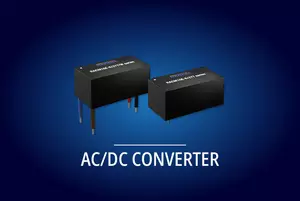
While discrete AC/DC, DC/DC or switching regulator power designs were once considered the lowest-cost default solution, hidden development and certification costs, EMC re-tests, and component tolerance issues frequently lead to delayed product launches and costly redesigns. By leveraging advanced SMT manufacturing and massive economies of scale, RECOM delivers complete, pre-tested, and fully certified AC/DC, DC/DC and switching regulator power modules at highly competitive price points.
RECOM uniquely also offers discrete solutions (transformer driver ICs, transformers and secondary side rectifier ICs) so designers can start with a power module and switch to a discrete solution as the project volume builds up. Whether you need on-board or off-board AC/DC power supplies, regulated or unregulated DC/DC converters, switching regulators, or LED drivers, RECOM offers budget-friendly solutions built to lower total cost of ownership. Using complete, pre-certified power modules accelerates time-to-market by simplifying safety and EMC compliance, while dramatically reducing Bill of Materials (BoM) complexity by replacing dozens of discrete components with a single, highly reliable module.
RECOM uniquely also offers discrete solutions (transformer driver ICs, transformers and secondary side rectifier ICs) so designers can start with a power module and switch to a discrete solution as the project volume builds up. Whether you need on-board or off-board AC/DC power supplies, regulated or unregulated DC/DC converters, switching regulators, or LED drivers, RECOM offers budget-friendly solutions built to lower total cost of ownership. Using complete, pre-certified power modules accelerates time-to-market by simplifying safety and EMC compliance, while dramatically reducing Bill of Materials (BoM) complexity by replacing dozens of discrete components with a single, highly reliable module.